
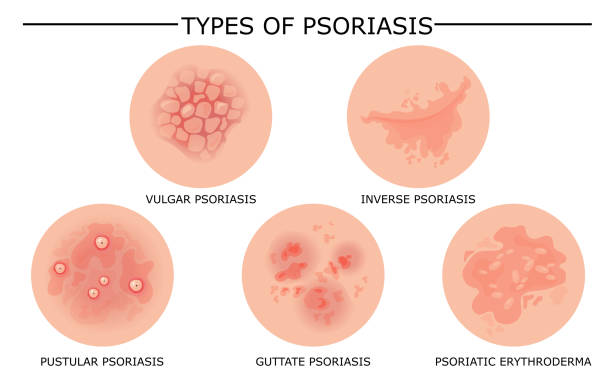
Psoriasis is not a single condition with a single presentation — and understanding the types of psoriasis Australia residents commonly experience is one of the most useful things anyone managing this condition can do. Different forms of psoriasis look different, affect different body areas, produce different symptoms, and require different management approaches. Some types are extremely common; others are rare. Some overlap with each other; others are entirely distinct. This guide explains the major types of psoriasis Australia dermatologists recognise, how each presents, where each commonly appears, and what distinguishes one form from another — giving you the clearest possible picture of what you or someone you care for may be experiencing.
What Is Psoriasis?
Psoriasis is a chronic immune-mediated inflammatory skin condition in which the immune system drives accelerated skin cell turnover — producing new skin cells far faster than old cells can shed, causing buildup on the skin surface.
In a normal skin cycle, cells complete their lifecycle and shed over approximately a month. In psoriasis-affected skin, this cycle is compressed to days — producing the characteristic buildup of skin cells that underlies most psoriasis presentations, regardless of type.
Psoriasis is not contagious and cannot be passed between people. It has a significant genetic component — people with a family history of psoriasis are more likely to develop it — and is typically triggered or worsened by various environmental and lifestyle factors including stress, illness, injury, and certain medications.
Common symptoms across most types of psoriasis Australia patients experience include skin redness, scaling, dryness, and itch — though the precise appearance and location of these symptoms varies substantially between the different forms.
DermNet NZ provides detailed clinical information on psoriasis including its underlying mechanisms, diagnostic criteria, and the full range of presentations across different psoriasis subtypes.
Plaque Psoriasis
Plaque psoriasis is the most common form of psoriasis, accounting for approximately 80-90% of all psoriasis cases, and is the presentation most people picture when they think of psoriasis.
Plaque psoriasis produces raised, well-defined patches of inflamed skin covered with silvery-white scale — called plaques. These plaques develop as accelerated skin cell production causes cells to pile up on the skin surface faster than they can be shed.
Plaque psoriasis most commonly affects the elbows, knees, lower back, and scalp — though it can develop anywhere on the body. The plaques are typically symmetrical, appearing on both elbows or both knees rather than on one side only.
The scale on plaque psoriasis plaques can be substantial — particularly at sites like the elbows and knees where the skin is naturally thicker and where the plaques tend to be most persistent. Plaques can range from small coin-sized patches to large confluent areas covering significant portions of the body.
Plaque psoriasis is a chronic condition — it typically follows a pattern of flares and remission, with symptoms worsening during stressful periods, illness, or when triggers are encountered, and easing during calmer periods or with effective management. It is the most frequently encountered of all types of psoriasis Australia dermatologists diagnose.
Scalp Psoriasis
Scalp psoriasis is one of the most common psoriasis presentations — affecting a significant proportion of people who have psoriasis — and produces scaling, redness, and itch on the scalp that can extend to the hairline, forehead, back of the neck, and behind the ears.
Scalp psoriasis is frequently confused with severe dandruff — both produce visible flaking on the scalp and in the hair. The differences are in the nature of the scale and the degree of inflammation: scalp psoriasis tends to produce thicker, more adherent scale with more pronounced redness at the scalp surface than typical dandruff, and the itch tends to be more intense.
The challenges of scalp psoriasis include the difficulty of applying products to a hair-covered scalp, the visibility of flakes in the hair and on clothing, and the social self-consciousness that visible scalp scaling can create for many Australians.
The scalp psoriasis routine guide covers scalp-specific management in detail — including shampoo choices, scalp routines, and practical approaches for day-to-day scalp comfort.
Guttate Psoriasis
Guttate psoriasis is a psoriasis subtype characterised by small, drop-shaped lesions — the word “guttate” comes from the Latin for “drop” — that appear scattered across the trunk, upper arms, thighs, and sometimes the face and scalp.
Unlike plaque psoriasis, which tends to develop gradually and persist chronically, guttate psoriasis often appears suddenly — frequently following a streptococcal throat infection or other trigger event. It is more common in children and young adults than in older age groups, though it can occur at any age.
The individual lesions of guttate psoriasis are smaller than typical plaques — usually less than 1cm — and have a finer, lighter scale than the thick buildup seen at plaque psoriasis sites. The widespread distribution of many small lesions across the trunk and limbs gives guttate psoriasis a distinctive spotted appearance.
Guttate is one of the more recognisable types of psoriasis Australia sees in younger patients — and one of the forms most likely to follow a trigger event such as a throat infection. For some Australians, a guttate episode is a single occurrence that clears over weeks to months. For others, guttate psoriasis recurs or transitions into chronic plaque psoriasis over time.
Inverse Psoriasis
Inverse psoriasis — also called flexural psoriasis — affects skin fold areas where two skin surfaces are in close contact, producing smooth, shiny, red patches rather than the raised scaling plaques of conventional psoriasis.
The skin fold environment explains why inverse psoriasis looks so different from plaque psoriasis. The moisture and warmth trapped between skin surfaces prevents the scale buildup that characterises plaque presentations — producing smooth, often moist-appearing red patches instead.
Common locations for inverse psoriasis include the underarms, groin, beneath the breasts, abdominal skin folds, and the crease between the buttocks. The sensitivity of skin fold areas and the constant friction from skin surfaces rubbing together makes inverse psoriasis particularly uncomfortable.
Inverse psoriasis is frequently confused with fungal infections and other skin fold conditions — which is one reason professional diagnosis is particularly important for this subtype. The inverse psoriasis guide covers this presentation in detail including how to distinguish it from other skin fold conditions.
Pustular Psoriasis
Pustular psoriasis is a less common form characterised by white, pus-filled blisters — pustules — surrounded by red, inflamed skin. Despite their appearance, the pustules are not infectious — the pus contains white blood cells, not bacteria.
Pustular psoriasis can be localised — appearing on specific areas such as the palms of the hands and soles of the feet (palmoplantar pustulosis) — or generalised, covering large areas of the body simultaneously.
Generalised pustular psoriasis is a more serious presentation that can develop rapidly and may be accompanied by fever, chills, and significant systemic symptoms. This form warrants prompt medical assessment — it can develop quickly and requires professional management rather than self-directed care.
Localised pustular psoriasis affecting the palms and soles is more common than the generalised form — it tends to be chronic and can significantly affect the ability to use the hands and walk comfortably.
Erythrodermic Psoriasis
Erythrodermic psoriasis is a rare but serious form of psoriasis in which widespread redness and scaling covers most or all of the body surface — it is the least common psoriasis type but requires the most urgent professional attention.
The widespread inflammation of erythrodermic psoriasis disrupts the skin’s ability to regulate temperature and fluid retention — producing systemic effects including temperature dysregulation, dehydration risk, and significant discomfort across the entire body surface.
Erythrodermic psoriasis can develop from existing plaque psoriasis that is destabilised — often by abrupt cessation of certain medications, infection, or other triggers — or can appear in people with no prior psoriasis history.
Anyone experiencing sudden, widespread redness covering most of the body surface should seek urgent medical assessment. Erythrodermic psoriasis requires professional medical management and is not appropriate for self-directed care.
Nail Psoriasis
Nail psoriasis affects the fingernails and toenails — producing changes in nail appearance and structure that can be the only visible sign of psoriasis in some people, or can accompany psoriasis elsewhere on the body.
Common nail psoriasis changes include:
Pitting — small depressions or dents in the nail surface, produced when psoriasis affects the nail matrix where the nail grows.
Onycholysis — separation of the nail from the nail bed, often beginning at the tip of the nail and progressing toward the base, leaving a white or yellow discoloured area.
Discolouration — yellow-brown “oil drop” discolouration under the nail, subungual hyperkeratosis (thickening of skin under the nail), or general yellowing of the nail.
Thickening and crumbling — nails may become thickened, rough, or crumbly in more significant presentations.
Nail psoriasis has an important clinical relationship with psoriatic arthritis — nail involvement is considered a risk factor for the development of psoriatic arthritis and is worth discussing with a healthcare professional. The nail psoriasis symptoms guide and nail psoriasis treatment guide cover nail-specific management in detail.
Psoriatic Arthritis
Psoriatic arthritis is an inflammatory arthritis condition that develops in some people with psoriasis — producing joint pain, stiffness, and swelling alongside or independently of skin symptoms.
Approximately 20-30% of people with psoriasis develop psoriatic arthritis at some point — making it one of the most clinically significant complications of psoriasis and an important reason for ongoing medical monitoring of the condition.
Psoriatic arthritis can affect any joint in the body — commonly the fingers, toes, wrists, knees, and lower back. The characteristic pattern of psoriatic arthritis often involves inflammation of entire fingers or toes — called dactylitis or “sausage digits” — which distinguishes it from other forms of arthritis.
Early recognition of psoriatic arthritis is important because joint damage can occur progressively if the inflammation is not managed. Anyone with psoriasis who develops persistent joint pain, stiffness, or swelling should discuss this with their GP or dermatologist — early assessment and management produces better long-term joint outcomes than delayed recognition.
Types of Psoriasis Australia — Can You Have More Than One?
The types of psoriasis Australia patients experience don’t always follow a single pattern — it is entirely possible to have more than one type simultaneously, and psoriasis presentations can change over time.
Plaque psoriasis and scalp psoriasis frequently coexist — the scalp is simply a common location for plaque psoriasis to develop. Similarly, nail psoriasis often accompanies plaque or scalp psoriasis rather than occurring in isolation.
Psoriasis presentations can also shift over time — a person who initially develops guttate psoriasis may later develop chronic plaque psoriasis. Someone with longstanding plaque psoriasis may develop inverse psoriasis in addition to their existing presentation.
The severity of different types can vary independently — one type may be mild while another is more active at the same time, and these patterns can shift across different periods of life.
How Is Psoriasis Diagnosed?
Psoriasis is typically diagnosed by a GP or dermatologist through clinical examination — assessing the appearance, distribution, and characteristics of the skin changes alongside personal and family history.
For most common psoriasis presentations — particularly plaque psoriasis and scalp psoriasis — experienced clinicians can usually identify the condition through visual assessment alone. For less typical presentations — including inverse psoriasis, pustular psoriasis, or nail-only involvement — additional assessment or referral to a dermatologist may be needed.
Skin biopsy — taking a small sample of skin for laboratory analysis — is occasionally used when the diagnosis is uncertain or when the presentation is atypical. Blood tests are not used to diagnose psoriasis itself but may be ordered to assess for psoriatic arthritis or to rule out other conditions.
Professional diagnosis matters — several other skin conditions can look like psoriasis, and conditions including eczema, seborrhoeic dermatitis, fungal infections, and contact dermatitis can all produce similar-appearing symptoms at various body locations. Starting management based on an incorrect self-diagnosis delays appropriate care.
The moisturisers and creams collection at Australian Psoriasis and Eczema Supplies includes fragrance-free options suited to sensitive and psoriasis-prone skin across different body areas and psoriasis types.
Frequently Asked Questions
What is the most common type of psoriasis in Australia? Plaque psoriasis is the most common form — accounting for approximately 80-90% of all types of psoriasis Australia dermatologists diagnose. It produces raised, scaling plaques most commonly at the elbows, knees, lower back, and scalp.
Can psoriasis change type over time? Yes — psoriasis presentations can shift over time. Guttate psoriasis sometimes transitions into chronic plaque psoriasis. The severity and distribution of any type can change across different life periods, and more than one type can be present simultaneously.
Is scalp psoriasis different from plaque psoriasis? Scalp psoriasis is technically plaque psoriasis occurring at the scalp location — it produces the same accelerated skin cell turnover and scaling as plaque psoriasis elsewhere, adapted to the scalp environment. The management approach differs because of the hair covering and the types of products that can practically be applied.
What type of psoriasis affects the nails? Nail psoriasis is a distinct presentation affecting the fingernails and toenails — producing pitting, onycholysis, discolouration, and thickening. It can occur alongside other types of psoriasis or as the only visible sign of psoriasis in some people.
Can psoriasis affect the joints? Yes — psoriatic arthritis develops in approximately 20-30% of people with psoriasis and produces inflammatory joint symptoms alongside skin symptoms. Joint pain, stiffness, and swelling in a person with psoriasis warrants prompt discussion with a healthcare professional.