
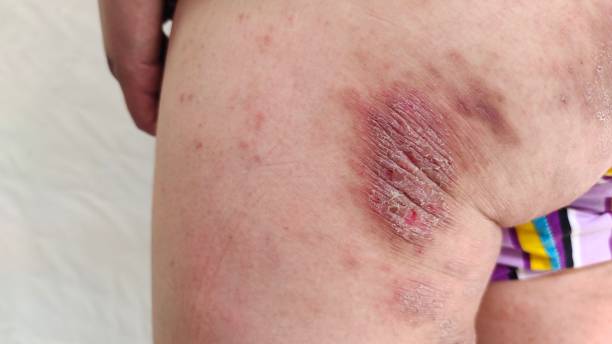
Flexural Psoriasis (Inverse Psoriasis) Australia: Understanding Psoriasis in Skin Folds
Flexural psoriasis Australia — also known as inverse psoriasis — is a recognised psoriasis subtype that affects areas where skin rubs together: the underarms, groin, beneath the breasts, abdominal folds, and other skin fold areas where friction and moisture create a very different skin environment from the exposed, drier surfaces where plaque psoriasis typically develops. Many Australians managing flexural psoriasis find it one of the more frustrating presentations precisely because these locations are sensitive, constantly in motion, and difficult to keep cool and dry.
This guide covers what flexural psoriasis is, how it differs from the more familiar plaque psoriasis, what makes skin fold symptoms worse, and what practical approaches Australians commonly use for managing this condition. It is an educational resource — not medical advice, and not a substitute for professional assessment by a GP or dermatologist.
What Is Flexural Psoriasis?
Flexural psoriasis Australia — also called inverse psoriasis — is a subtype of psoriasis that develops in skin fold areas where two skin surfaces are in close contact, rather than on the exposed, high-friction surfaces where plaque psoriasis most commonly appears.
Like all forms of psoriasis, flexural psoriasis involves the immune system driving accelerated skin cell turnover — but the skin fold environment changes how this presents visibly. Where plaque psoriasis at the elbows or knees typically produces raised, scaling plaques with visible thick buildup, flexural psoriasis tends to appear as smooth, red, shiny patches without the heavy scale that characterises plaque presentations.
The reason for this difference is the environment. Skin fold areas maintain higher moisture levels than exposed skin surfaces — the constant skin-to-skin contact prevents the evaporation and drying that allows thick scale to develop. The result is a smoother, often shinier appearance that can look quite different from what many people associate with psoriasis — and that frequently leads to misdiagnosis as fungal infection, contact dermatitis, or intertrigo.
According to DermNet NZ on flexural psoriasis, flexural and inverse psoriasis are interchangeable terms for the same condition — a GP or dermatologist familiar with the range of psoriasis presentations can distinguish it from fungal conditions and other skin fold conditions, which is important because incorrect treatment can worsen the condition.
Where Does Flexural Psoriasis Commonly Appear?
Flexural psoriasis Australia can affect any area where skin surfaces are in sustained contact — and the specific locations vary significantly between individuals.
Underarms
The axilla is one of the most frequently affected sites — warm, moist, and subject to continuous movement. Deodorant and antiperspirant products applied to this area can also be a source of additional chemical irritation on already-reactive skin.
Groin and Inner Thighs
The groin fold is another common location — subject to constant friction from walking, moisture from sweating, and the additional irritation of clothing waistbands and underwear elastic sitting directly against the skin fold.
Under the Breasts
The inframammary fold — the crease beneath the breasts — is a commonly affected site, particularly in warmer weather when heat and moisture accumulate in this area through the day.
Abdominal Folds
The skin fold at the lower abdomen — where the abdomen meets the groin area — can develop flexural psoriasis, particularly in Australians with larger abdominal folds where skin-to-skin contact is sustained.
Buttock Folds and Genital Area
The crease between the buttocks and the perigenital area are affected locations — subject to friction during sitting, walking, and physical activity. Flexural psoriasis in the genital and perigenital area requires particular care given the sensitivity of this location — professional assessment and guidance is always recommended before using any topical products in this area.
Elbow and Knee Flexures
While the backs of the knees and inside of the elbows are more commonly associated with atopic eczema, flexural psoriasis can also affect these flexural creases.
Symptoms of Flexural Psoriasis
The symptom profile of flexural psoriasis Australia differs from plaque psoriasis in several important ways — reflecting the unique environment of skin fold areas.
Smooth Red Patches
The defining visual feature of flexural psoriasis is smooth, well-defined red or pink patches rather than the raised, scale-covered plaques of plaque psoriasis. The patches typically have a shiny quality from the moisture retained in skin fold areas. The borders are usually fairly sharp and well-defined.
Minimal Scaling
Unlike the thick, adherent silvery scale of plaque psoriasis, flexural psoriasis produces little to no visible scale. The moist skin fold environment prevents the thick scale buildup that characterises psoriasis at drier body sites. The absence of scale is one of the features most commonly causing flexural psoriasis to be mistaken for fungal infection or contact dermatitis.
Burning and Irritation
Burning and stinging sensations are prominent in flexural psoriasis — more so than the itch-dominant experience of plaque psoriasis. The combination of skin barrier disruption and continuous friction in skin fold areas produces a burning, uncomfortable sensation that can be significantly worse than the itch of psoriasis at other body sites.
Itching
Itching is also present — and can be intense — though many people with flexural psoriasis report burning as the more dominant and distressing sensation. Scratching is particularly problematic in skin fold areas because the Koebner response can drive new psoriasis in response to skin trauma, and the moist environment increases the risk of secondary infection in scratched or broken skin.
Sensitivity and Pain
The skin fold locations affected by flexural psoriasis are among the most sensitive on the body — and the continuous friction and moisture exposure means that active flexural psoriasis can be significantly painful, particularly during movement or physical activity.
What Causes Flexural Psoriasis?
Flexural psoriasis Australia is driven by the same underlying autoimmune mechanism as other psoriasis subtypes — but the skin fold environment creates specific aggravating factors that differ from plaque psoriasis triggers.
Genetics and Immune Dysfunction
Like all psoriasis, flexural psoriasis involves a genetic predisposition combined with immune system dysfunction — T-cells drive accelerated skin cell turnover that produces the characteristic inflammatory skin changes. Having a family history of psoriasis increases the risk of developing flexural psoriasis.
Friction
The constant friction of skin-to-skin contact in fold areas is one of the most significant aggravating factors in flexural psoriasis — maintaining the inflammatory response and potentially triggering the Koebner phenomenon where skin trauma drives new lesion development.
Moisture and Sweating
Sweat accumulation in skin folds creates a warm, moist environment that worsens the inflammatory skin response and increases the risk of secondary conditions in already-compromised skin. Australian summers significantly worsen this moisture challenge.
Heat Trapping
The enclosed nature of skin fold areas means heat accumulates more readily than at exposed skin surfaces — elevated local skin temperature intensifies itch and inflammatory activity in flexural psoriasis-affected areas.
Obesity and Skin Fold Depth
Deeper skin folds — associated with higher body weight — create more sustained skin-to-skin contact, greater moisture and heat trapping, and more significant friction, all of which worsen flexural psoriasis. Weight management is sometimes discussed as a component of broader psoriasis management for this reason.
Flexural Psoriasis vs Other Skin Fold Conditions
Flexural psoriasis Australia is frequently confused with other conditions that can produce similar-looking changes in skin fold areas — accurate diagnosis is essential because management approaches differ significantly.
| Feature | Flexural Psoriasis | Fungal Infection (Tinea) | Contact Dermatitis | Intertrigo | Eczema |
|---|---|---|---|---|---|
| Cause | Autoimmune | Fungal infection | Irritant or allergen | Friction and moisture | Inflammatory |
| Appearance | Smooth red shiny patches | Red with scaly border, possible central clearing | Red, may blister | Red, raw, sometimes weeping | Red, dry, possibly weeping |
| Scale | Minimal | Scaly border | Variable | None | Variable |
| Contagious | No | Yes | No | No | No |
| Treatment | Anti-inflammatory, barrier support | Antifungal | Trigger avoidance | Moisture and friction reduction | Emollient, anti-inflammatory |
The smooth, non-scaling appearance of flexural psoriasis is the feature most commonly causing misdiagnosis. Antifungal treatments used for tinea are not appropriate for psoriasis — and applying them to flexural psoriasis produces no benefit and may delay appropriate management.
How Is Flexural Psoriasis Diagnosed?
Flexural psoriasis Australia diagnosis requires professional assessment — self-diagnosis in skin fold areas is particularly unreliable given how closely it resembles other conditions.
Clinical Assessment
A GP or dermatologist will examine the appearance and distribution of the skin changes and review the person’s medical and psoriasis history. Known psoriasis elsewhere on the body strongly supports a flexural psoriasis diagnosis when skin fold changes are present, though flexural psoriasis can also be the sole or primary psoriasis presentation.
Differential Diagnosis
In uncertain cases — particularly where fungal infection cannot be confidently excluded — a skin scraping for microscopy and fungal culture provides definitive exclusion of tinea. A skin biopsy may be performed in diagnostically challenging cases.
Medical History
A personal or family history of psoriasis, associated psoriatic arthritis, or other autoimmune conditions supports the flexural psoriasis diagnosis and may influence the management approach recommended.
According to Healthdirect Australia, any skin fold condition that is uncertain in diagnosis or not responding to initial management should be assessed by a GP — early accurate diagnosis significantly improves management outcomes.
Treatment Options for Flexural Psoriasis in Australia
Flexural psoriasis treatment in Australia is managed under GP or dermatologist guidance — skin fold locations require specific consideration because the thin, sensitive skin in these areas responds differently to treatments than thicker-skinned body sites.
Moisturising and Barrier Support
Gentle, consistent emollient moisturising supports skin barrier function in flexural psoriasis-affected areas. Lighter cream formulations are typically better suited to skin fold areas than thick ointments — which can feel occlusive and trap moisture. Fragrance-free products reduce the chemical irritation risk in already-sensitive areas.
Topical Treatments
Topical corticosteroids used in skin fold areas require lower potency than those used on other body sites — the thinner skin and occluded environment of skin folds increases absorption and sensitivity to side effects including skin thinning. Vitamin D analogues and combination preparations are also used under dermatologist guidance. The specific treatment approach for flexural psoriasis in sensitive areas like the groin and genitals should always be guided by a healthcare professional.
Trigger Management
Reducing friction, managing moisture and sweating, choosing appropriate clothing, and addressing any identified triggers are important components of day-to-day flexural psoriasis management alongside medical treatment.
Systemic Treatments
For more severe or widespread flexural psoriasis — or where topical treatments are insufficient — systemic treatments under specialist management may be considered. The types of psoriasis australia guide covers the broader psoriasis treatment landscape for Australians researching psoriasis management options.
The creams and sprays collection at Australian Psoriasis and Eczema Supplies covers topical products for Australians managing psoriasis conditions alongside professional guidance.
Managing Flexural Psoriasis Day-to-Day
Practical daily management of flexural psoriasis Australia focuses on reducing friction and moisture — the two primary aggravating factors — while maintaining gentle, consistent skin care.
Clothing Choices
Loose-fitting cotton or bamboo fabrics that allow airflow suit flexural psoriasis best — breathable, moisture-wicking fabrics reduce heat and sweat accumulation in fold areas. Tight synthetic fabrics, compression garments, and clothing with thick seams or elastic at skin fold sites increase friction and moisture trapping.
Sweat Management
Prompt showering after exercise or physical work, gentle patting dry of skin fold areas, and allowing a brief air-dry period before dressing reduces residual moisture. Fragrance-free, gentle antiperspirant formulations reduce underarm sweating without additional chemical irritation.
Gentle Cleansing
Fragrance-free, pH-balanced gentle cleansers applied with fingertip pressure rather than abrasive cloths reduce chemical and physical irritation on already-sensitive skin fold skin. Standard soaps and fragranced body washes add unnecessary irritation.
Weight Management
For Australians with deeper skin folds contributing to flexural psoriasis severity, weight management is sometimes discussed as a component of broader management — reducing fold depth reduces sustained skin-to-skin contact, friction, and moisture trapping.
Frequently Asked Questions
What is flexural psoriasis?
Flexural psoriasis — also called inverse psoriasis — is a subtype of psoriasis that develops in skin fold areas including the underarms, groin, beneath the breasts, and abdominal folds. It produces smooth, shiny red patches rather than the raised, scaling plaques of plaque psoriasis — because the moist skin fold environment prevents thick scale from forming. It is driven by the same autoimmune mechanism as other psoriasis subtypes but presents and is managed differently due to the skin fold environment.
Is flexural psoriasis the same as inverse psoriasis?
Yes — flexural psoriasis and inverse psoriasis are two names for exactly the same condition. Flexural refers to the flexural areas of the body (skin folds and bends) where the condition develops; inverse refers to the inverted distribution compared to typical plaque psoriasis locations. Both terms are used in Australian dermatological practice and describe the same presentation.
Why does psoriasis occur in skin folds?
Psoriasis can develop in skin fold areas because the same underlying immune dysfunction that drives psoriasis elsewhere on the body affects skin fold skin. The specific appearance of flexural psoriasis differs from plaque psoriasis because the skin fold environment — with its sustained moisture, heat, and friction — changes how the inflammatory process manifests on the skin surface.
Can flexural psoriasis be mistaken for a fungal infection?
Yes — flexural psoriasis is frequently mistaken for fungal infections such as tinea, as well as intertrigo and contact dermatitis, because all of these can produce similar-looking red, moist patches in skin fold areas. Professional diagnosis is important because antifungal treatments used for tinea are not appropriate for psoriasis. A skin scraping can definitively exclude fungal infection when the diagnosis is uncertain.
How is flexural psoriasis treated in Australia?
Flexural psoriasis treatment in Australia is managed under GP or dermatologist guidance — skin fold locations require lower-potency topical treatments than other body sites due to thinner skin and increased absorption. Treatment combines topical anti-inflammatory treatments, gentle emollient moisturising, and practical management of friction and moisture triggers. Systemic treatments may be considered for more severe or resistant presentations under specialist guidance.
Flexural Psoriasis Australia: What to Know
Flexural psoriasis Australia — inverse psoriasis — is a recognisable and manageable psoriasis subtype, but one that requires specific consideration due to the sensitive skin fold locations it affects. The smooth, non-scaling appearance is consistently the feature causing most diagnostic confusion — professional assessment is essential to distinguish it from fungal infection, contact dermatitis, and intertrigo before treatment begins.
Consistent gentle skin care, friction and moisture management, and appropriate topical treatment under professional guidance provide the foundations of effective flexural psoriasis management. The creams and sprays collection at Australian Psoriasis and Eczema Supplies covers topical products for Australians managing psoriasis conditions.