
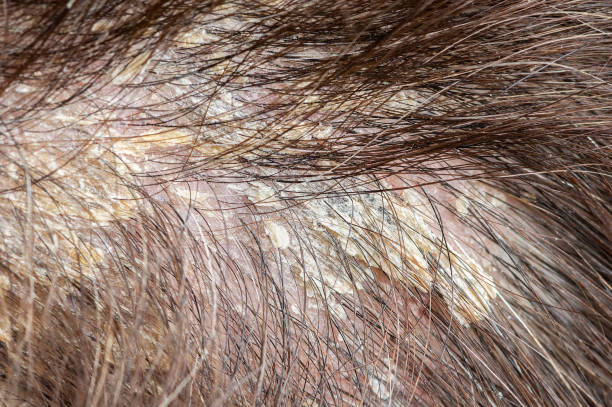
A practical psoriasis scalp routine in Australia doesn’t need to be complicated — but it does need to be consistent. Many Australians managing scalp psoriasis find that the condition responds less to any single product or treatment and more to the reliability of a structured approach that combines the right shampoo, appropriate moisturising support, and where relevant, additional tools like UVB therapy. Building that routine — and understanding why each element matters — is what this guide covers.
Scalp psoriasis is a chronic skin condition affecting the scalp, characterised by raised, scaly patches, dryness, itching and flaking that can range from mild to significant. Unlike psoriasis on exposed skin, the scalp presents unique management challenges: hair makes product application difficult, certain treatments affect hair appearance, and the area is subject to ongoing friction and product exposure through regular washing.
This article isn’t a product review or a shampoo guide — there’s already extensive content on those topics. This is a practical framework for building and maintaining a scalp care routine that brings multiple supportive elements together in a way that works for everyday Australian life.
Why Scalp Psoriasis Can Be Difficult to Manage
Scalp psoriasis is often harder to manage than psoriasis on other body areas, primarily because hair creates barriers to effective product application and complicates the consistency that psoriasis management typically requires.
Many Australians notice that their scalp psoriasis follows a frustrating pattern: it settles with consistent effort, then returns when routine slips or triggers accumulate. A common frustration is investing in the right products only to find that irregular use produces irregular results. The condition itself is variable — it responds to seasons, stress, illness, hormonal shifts and general health — which means a routine needs to be robust enough to provide consistent support even when other variables are in flux.
Several specific factors make scalp management more demanding than body-site psoriasis:
Hair as a physical barrier means that getting any topical product — shampoo, cream, oil — from hair surface to scalp requires technique and effort. Products applied carelessly coat the hair shaft rather than reaching the skin, which reduces effectiveness and can leave residue that contributes to product buildup.
Wash frequency tension is real: scalp psoriasis benefits from regular washing to reduce scale buildup, but overwashing can strip moisture and increase irritation. Finding the right frequency — and the right products for that frequency — is one of the more individualised aspects of scalp management.
Visible symptoms add additional pressure. Flaking onto clothing and shoulders is one of the most socially noticeable aspects of scalp psoriasis, and it creates pressure to use more product more often — which sometimes makes the condition worse rather than better.
Product sensitivity is also a consistent challenge. Scalp skin affected by psoriasis tends to be more reactive to fragrances, harsh surfactants and certain active ingredients. Products that are well-tolerated by unaffected scalp skin can trigger irritation in psoriasis-affected areas.
Understanding these challenges is the starting point for building a routine that works with the scalp’s specific needs rather than against them.
Building a Consistent Scalp Routine
The most effective psoriasis scalp routines in Australia share one quality above all others: consistency. Not complexity, not the most aggressive treatment approach, not the most expensive products — consistency.
A scalp psoriasis routine is most useful when it has clear, repeatable stages that can be maintained across busy weeks, travel, seasonal changes and the natural variability of the condition. The framework below covers the core elements most commonly included in effective scalp management routines.
Wash days — typically two to four times per week for most people — form the backbone of the routine. This is when active shampoo treatment happens, scale is addressed and the scalp is reset for the days ahead.
Between-wash support covers the days between washing. Scalp skin doesn’t stop needing support just because it hasn’t been washed. Light moisturising, gentle scalp massage and avoiding irritation triggers between washes are all part of a complete routine.
Active treatment integration covers where relevant tools — UVB therapy, medicated topicals, prescribed treatments — fit into the routine on appropriate days and in an appropriate sequence relative to other products.
Trigger management — identifying and adjusting for personal triggers such as heat, stress, product changes and seasonal shifts — is the ongoing maintenance layer of any effective scalp routine.
Choosing a Shampoo for a Psoriasis-Prone Scalp
Shampoo is the most regularly used active product in any scalp psoriasis routine, which makes choosing the right formulation one of the most consequential decisions in building an effective framework.
Different shampoo formulations serve different purposes:
Coal tar shampoos are among the most established options for scalp psoriasis support. Coal tar has a long history of use for psoriasis and seborrhoeic conditions, and coal tar shampoos are commonly used as a regular wash-day treatment. They tend to be more effective when used consistently over time rather than as occasional treatments. Our guide to coal tar shampoo in Australia covers the key considerations in detail.
Zinc pyrithione shampoos are widely used for their scalp-calming properties and tend to be well-tolerated as more frequent wash options for people who need to wash more than twice per week.
Salicylic acid shampoos work by softening and lifting scale, which can help with the physical buildup that characterises scalp psoriasis. They’re often used as part of a rotation rather than as the sole shampoo.
Fragrance-free formulations are worth considering for scalp skin that is particularly reactive. Fragrance is one of the most common irritation triggers in scalp products, and removing it from the routine can make a meaningful difference for sensitive scalp types.
The broader range of shampoos for scalp psoriasis available covers the main formulation types, with options suited to different wash frequencies and scalp sensitivities.
How Often Do People Wash Their Hair With Scalp Psoriasis?
Most Australians managing scalp psoriasis wash their hair two to four times per week — often using a rotation of shampoo types rather than a single product every wash day.
Daily washing is not inherently harmful if the right products are used, but many people find that washing frequency affects scalp moisture balance significantly. A common approach is using a medicated or active shampoo two to three times per week, with a gentle fragrance-free formulation on any remaining wash days if additional washing is needed.
The rotation approach is popular because it allows consistent active ingredient exposure without the cumulative drying effect of using medicated shampoos daily. It also reduces the likelihood of the scalp becoming tolerant to a single active ingredient over time.
Water temperature matters too. Many Australians notice that hot water increases scalp irritation and temporarily worsens flaking. Lukewarm water during scalp washing is a simple adjustment that can meaningfully reduce post-wash irritation.
For a detailed guide to washing technique — how to apply shampoo effectively through hair to the scalp, how long to leave products on, and how to minimise mechanical irritation during washing — our guide on washing hair with scalp psoriasis covers the practical detail.
Supporting the Scalp Between Washes
Between-wash scalp care is one of the most overlooked elements of a psoriasis scalp routine in Australia, yet it’s often where consistency makes the most visible difference to day-to-day comfort.
Several approaches are commonly used for between-wash scalp support:
Light scalp moisturising involves applying a small amount of a light, non-greasy cream or oil to affected scalp areas between washes. This helps maintain skin moisture and reduces the tightness that many people experience as scale accumulates. The goal is to support the skin barrier in the affected areas specifically — not to coat the hair.
Avoiding mechanical irritation matters more than most people realise. Tight hairstyles, frequent brushing of affected areas and scratching all increase irritation and can worsen flaking. Being conscious of these habits between wash days — particularly during flare periods — is part of routine management.
Product residue awareness is worth building into the routine. Styling products — hairspray, dry shampoo, gel — can accumulate on the scalp and contribute to irritation or buildup. Keeping styling product use minimal on actively affected areas and washing out residue regularly reduces a preventable irritation trigger.
Gentle scalp massage between washes can support circulation and help loosen scale before the next wash day, making active shampoo treatment more effective. It should be gentle enough to avoid breaking skin and creating additional irritation.
Our creams and scalp support products include options suited to between-wash application for those wanting leave-on support for dry or irritated scalp areas.
Where UVB Therapy May Fit Into a Scalp Routine
For Australians with scalp psoriasis who’ve found topical shampoos and moisturisers alone insufficient, UVB light therapy is one of the additional tools many people explore as part of a broader scalp routine.
UVB therapy delivers narrowband ultraviolet light directly to affected skin to support the skin’s natural management processes — working differently from topical approaches rather than replacing them.
For scalp psoriasis specifically, delivering UVB through hair to the scalp requires a device designed for that purpose. Handheld UVB combs — devices with a comb attachment that parts hair to deliver light directly to the scalp — are specifically designed for this application and are one of the more practical home UVB options for scalp-specific use.
In a scalp routine, UVB therapy typically fits into non-wash days or immediately before washing. Common approaches include using UVB on alternate days or three times per week, with shampoo treatment on wash days and UVB on the days in between. This avoids the two treatments competing with each other on the same day.
Using UVB before washing on wash days — UVB exposure first, shampoo second — is another common sequence that works well for many people.
UVB therapy for scalp psoriasis works cumulatively over weeks rather than producing immediate results. Consistency is the key variable — irregular sessions produce irregular outcomes. Our light therapy collection includes options suited to at-home scalp UVB use, and our guide to UVB light therapy at home in Australia covers the foundational information in more detail.
Common Triggers That Can Disrupt a Scalp Routine
Understanding personal triggers allows the routine to adapt rather than being derailed. Common triggers that affect scalp psoriasis include:
Seasonal changes are one of the most consistent disruptors. Scalp psoriasis often worsens in winter — reduced natural UV exposure, dry indoor heating and lower humidity all contribute. Adjusting the routine seasonally — increasing wash frequency, adding moisturising support, considering UVB therapy during winter months — is a common approach. Many Australians also notice improvement in summer with increased natural sun exposure, though managing this carefully is important.
Stress is one of the most consistently reported scalp psoriasis triggers. Periods of elevated stress often correspond to flare periods, and managing stress as part of a broader health routine supports scalp management indirectly.
Product changes can trigger reactions in sensitive scalp skin. Introducing a new shampoo, conditioner, styling product or scalp treatment — particularly multiple changes at once — makes it difficult to identify what’s helping and what isn’t. Making one change at a time is the more informative approach.
Illness and medication affect inflammatory responses. Some medications can trigger psoriasis flares, and illness generally increases skin reactivity. Being aware that the scalp may be more reactive during and after illness helps set realistic expectations during those periods.
Hormonal shifts — menstrual cycles, pregnancy, menopause — are not controllable triggers but being aware of them allows for routine adjustment during predictably more reactive periods.
Why Consistency Often Matters More Than Complexity
The single most important principle in any psoriasis scalp routine in Australia is consistency — a simple routine followed reliably almost always outperforms a complex routine followed intermittently.
A common pattern among people managing scalp psoriasis is investing in multiple products, building an elaborate routine, maintaining it for a few weeks, finding it unsustainable, abandoning it, and experiencing a return of symptoms. The answer to this cycle is almost never a more sophisticated routine — it’s a simpler one that can be maintained across real life.
Choosing products you’ll use reliably matters more than choosing the most clinically impressive formulation. The best shampoo for scalp psoriasis is the one used consistently at the right frequency — not the one used occasionally.
Building the routine around existing habits — shower timing, morning routine, pre-sleep habits — increases the likelihood of consistent follow-through without relying on willpower.
Accepting that flares don’t mean failure is also part of sustainable routine management. Scalp psoriasis is a chronic condition with natural variability. A flare during a period of sustained stress or illness isn’t evidence that the routine isn’t working — it’s evidence that the condition responds to those triggers. Maintaining the routine through a flare, rather than abandoning it, is usually the most effective response.
Giving changes time to work is essential. Coal tar shampoos, UVB therapy and topical treatments all work cumulatively over weeks. Switching products after a week of use because results aren’t immediate is one of the most common reasons scalp routines underperform.
For those also managing scalp conditions beyond psoriasis — seborrhoeic dermatitis, folliculitis or scalp eczema — our guide to itchy scalp psoriasis treatment provides additional context on distinguishing between different scalp presentations and their respective management approaches.
When to Seek Professional Advice
A self-managed scalp routine is appropriate for mild to moderate scalp psoriasis and many Australians manage effectively without formal medical involvement. There are circumstances, however, where professional guidance is worth seeking.
If the condition is severe or significantly affecting quality of life, prescription treatments — topical corticosteroids, vitamin D analogues, biologics — are outside the scope of over-the-counter management and require medical assessment.
If the diagnosis is uncertain, professional input is the appropriate first step. Scalp psoriasis, seborrhoeic dermatitis, scalp eczema and fungal conditions can present similarly, and accurate diagnosis affects which shampoo and treatment approaches are appropriate. Healthdirect Australia provides a reliable clinical reference for understanding psoriasis presentations and when to seek professional assessment.
If over-the-counter approaches haven’t produced meaningful improvement after eight to twelve weeks of consistent use, this may indicate that prescription-strength support is appropriate alongside the existing routine.
If scalp symptoms are accompanied by psoriasis elsewhere on the body, joint pain or significant skin barrier disruption, comprehensive assessment is more appropriate than self-management alone.
Frequently Asked Questions
How often should I wash my hair if I have scalp psoriasis? Most Australians find two to four times per week works well — using a medicated or active shampoo on some wash days and a gentler formulation on others. Daily washing is possible with the right products but many people find it increases dryness over time.
Can I use a regular conditioner with a scalp psoriasis shampoo? Yes — applying conditioner to the mid-lengths and ends rather than the scalp avoids adding unnecessary product to the affected area while maintaining hair condition. Fragrance-free conditioners are preferable for scalp-sensitive individuals.
Should I remove scalp flakes before washing? No — mechanical removal of scale through scratching can break the skin barrier and increase inflammation. Active shampoos and gentle scalp massage during washing are more effective and less damaging approaches to scale management.
Can UVB therapy replace shampoo treatment for scalp psoriasis? They work differently and most people use them as complementary approaches. Shampoos address the scalp surface — scale, oil balance, active ingredient delivery. UVB therapy works at a deeper level through light exposure. Using both in a coordinated routine is a common approach for moderate scalp psoriasis.
How long does it take to see results from a consistent scalp routine? Most active shampoo ingredients require four to eight weeks of consistent use before meaningful results become visible. UVB therapy typically requires a similar timeline. Patience with a consistent routine is more effective than switching products frequently.
What is the difference between scalp psoriasis and seborrhoeic dermatitis management? Both benefit from regular medicated shampoo use, but the specific active ingredients differ. Coal tar and salicylic acid are more associated with psoriasis management, while antifungal ingredients — ketoconazole, zinc pyrithione — are more central to seborrhoeic dermatitis. If uncertain which condition is present, professional assessment is the appropriate first step.